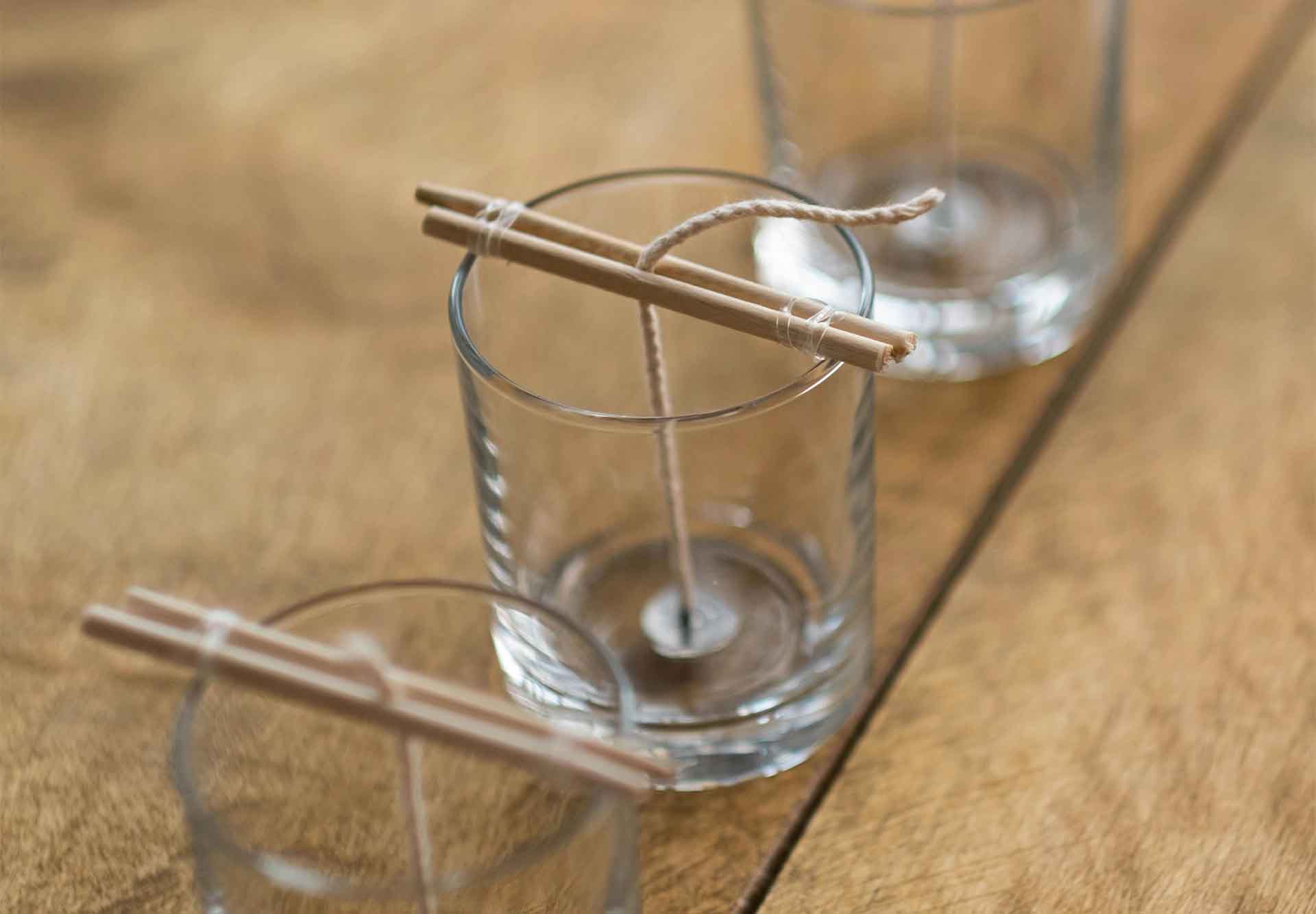
Choosing The Best Wick For Soy Candles
Hey there! It’s a glorious sunny day here in Milwaukee, WI. Our spring temperatures have been up and down like a rollercoaster. I look forward to seeing our perennials bloom, cleaning out my small pond (well, maybe more-so enjoying the pond AFTER it has been cleaned out) and mowing our little city yard.
As I patiently wait for my new soy candle making kit to arrive from the west coast, I will share with you some tidbits about choosing the best wick for your soy candles. While I’m new to the world of candle making and eagerly awaiting the arrival of my kit, I’ve been diving deep into research and learning everything I can about this fascinating craft.
Wicks play such a significant role in how a candle performs. For instance, if a wick is too small or too large for a particular container/wax/fragrance combination, the candle’s performance will suffer.
By poor performance, I mean when candles exhibit undesirable characteristics during burning.
This could include issues such as excessive soot and smoke, which not only detract from the aesthetic appeal of your candles but can also pose health risks and cause indoor air pollution.
Additionally, another common problem is when candles fail to burn wax all the way to the edges of the container, leaving behind unburned wax along the sides—a phenomenon known as tunneling. Tunneling not only wastes wax but also affects the overall burn time and scent throw of the candle. Understanding and addressing these performance issues is crucial for achieving optimal results and ensuring that your candles burn cleanly, evenly, and safely.
Before moving on, I would like to share something with you.
Lessons in Life…
Has the following ever happened to you?
I can’t tell you how many times I was trying to figure out a meal plan for the night, came up with a list of things in the fridge and threw a few items into a Google search to see what recipes would pop up for inspiration.
I would alter a highly rated recipe based on available ingredients and what sounded reasonable. And luckily, my concoctions were often a hit with the family.
That’s the good part.
The problem was that I would never write down the final recipe, so consequently they were never to be repeated. Don’t let this happen to your candle making!
It is important to keep a detailed log of any testing that you do so that you are able to repeat what works.
As you begin experimenting, altering and testing your candle recipes to make them perform even better (testing, testing and more testing), please keep good notes and write down everything about your materials and process.
As I have been told, it is important to keep a detailed log of any testing that you do so that you are able to repeat what works. Your candle making recipe card will thank you!
The correct wick for your situation will depend on many things:
- The size of your container (the width plays a big role)
- Which wax you will be using
- Whether you’ll be using fragrance or candle colorants
- The fragrance load you are using (percentage of fragrance)
Changing one piece of the puzzle may require you to alter your wick choice, depending on how your candle is burning. The best wick for your soy candles isn’t always the first one you choose.
There are indicators to watch for to help judge if you are using the proper wick or not:
- The melt pool will be somewhere close to 1/2″ deep.
- Flickering will be at a minimum.
- Soot and smoke is virtually non-existent.
- The flame is approximately 1″ tall
- After burning for a while, the melt pool will have melted all the way to the edges. If it doesn’t quite make it, you should look at a slightly wider diameter wick. If it melts to the edges too quickly, you may have to go to a smaller diameter wick.
Soy Candle Wick Types
When we properly wick our candles, they will burn cleaner, have a predictable burn time, have better scent throw and will be safer to burn.
However, it’s easy to get a bit intimidated by all the candle wick options on the market. But for now, there are only a few varieties that we will concentrate on for our soy candle making. Below is a list of some options for candle wicks for soy wax.
Before you check them out, I thought that I would pass along a good resource recommended to me by a fellow soy candle maker.
Please go check out the excellent wick sizing guide at Lone Star Candle Supply. In addition, they also sell sampler kits of the various wicks which will give you a few of each size. That way, you can easily “size up” or “size down” if needed depending on how your testing goes.
While there may not necessarily be a best cotton wick for soy candles being every candle can have a different requirement, these are some you will likely encounter along the way.
ECO Wicks
ECO wicks are specifically engineered for use with soy wax candles. These are flat, braided cotton wicks with a rigidity that helps during pouring. In addition, they tend to minimize mushrooming, soot, and carbon buildup during candle burning and are a popular choice among soy candle makers due to their reliability and performance.
CD (Stabilo) Wicks
CD wicks are flat, braided cotton wicks with paper threads woven into the cotton. They are an excellent option for candle makers looking for a versatile wick that offers consistent burning properties. They are often pre-tabbed with a metal sustainer at the base for easy installation in candle containers.
LX Wicks
LX wicks are braided cotton wicks. They are known for their excellent performance, offering a stable and even burn with minimal mushrooming (carbon buildup) and sooting. They are engineered to promote efficient wax consumption and a steady flame throughout a soy candle’s lifespan.
Spooled Wicks
Spooled wicks are unprimed wicks (not pre-waxed). This means that you will have to prime them yourself. However, they are cost effective and provide flexibility in candle making, allowing soy candle makers to customize the wick length.
Wooden Wicks
Wood wick soy candles have gained popularity in recent years for their unique aesthetic appeal.
Above all, these crackling wicks add a cozy ambiance to your soy candles and provide an excellent option for those seeking a natural, rustic look. Plus, they create a beautiful flickering flame that adds character to any room.
They are known for their clean and even burn, producing a wide, flickering flame that creates a beautiful light and enhances the fragrance throw of soy candles. The unique flame characteristics of wooden wicks can help optimize the burn pool and minimize soot or mushrooming. Wooden wicks are not primed like the other mentioned choices. Instead, they use the wax of the candle as fuel.
It seems wooden wicks offer a charming and rustic touch to soy candles. Their crackling sound may add an extra layer of warmth and comfort, perfect for cozy evenings at home or intimate gatherings with loved ones.
I will report back once I’ve experimented making a few crackling soy candles of my own. Sounds enjoyable!
As we embark on our soy candle making journey, don’t hesitate to experiment with different wick types and techniques. Each candle we create will be an opportunity to learn and grow as a candle maker. So, let’s get to some experimentation, testing and fun!
Now, I’d love to hear from you! Share your experiences, tips, and questions in the comments below. Let’s ignite a conversation, inspire one another, and continue to explore the art of soy candle making together.
Happy candle making!